




Choosing where to trade forex is one of the most consequential decisions a trader makes — yet most beginners focus on bonuses and flashy interfaces instead of the criteria that truly protect their money. Knowing how to choose a forex broker the right way means evaluating regulation, trading costs, platform quality, and support before a single dollar is deposited. Traders who skip this process often end up with hidden fees, slow withdrawals, or worse — an unregulated broker with no accountability. This guide walks you through the seven criteria that define how to choose a forex broker properly, closes with a practical checklist, and shows how Trendo holds up against every standard.
Why Choosing the Right Broker Matters More Than You Think
The broker you trade with directly determines your profitability, your safety, and your overall experience in the market. A regulated broker with tight spreads and a stable platform gives you a real edge. An unregulated one with hidden fees and poor execution can silently drain your account even when your analysis is correct. Most traders only realize they made the wrong choice after a withdrawal is delayed, a trade is requoted, or a fee they never agreed to appears on their statement. Want to see how a properly regulated broker looks in practice? Explore Trendo’s platform as you read through this guide.

Here are the most common ways a bad broker costs you money:
- Wide spreads on gold and major pairs inflate every single trade — a 2-pip spread instead of 0.5 pips on EUR/USD costs you $15 extra per standard lot.
- Hidden fees such as inactivity charges, currency conversion markups, and inflated swap rates only appear after you’ve committed capital.
- Withdrawal delays or refusals are the most serious red flag — some brokers slow down or block withdrawals once they have your funds.
Criterion 1 — Regulation: The Non-Negotiable First Step
When a broker is regulated, it means a government-authorized body has reviewed its operations, capital reserves, client fund segregation practices, and complaint procedures. Regulation doesn’t guarantee profits, but it does create legal accountability. A regulated broker is required to keep your money in segregated accounts, meaning the firm cannot use your deposits to cover its own operational expenses. Anyone learning how to choose a forex broker should treat regulation as the absolute first filter — not one of several options to weigh.

How to Verify a Broker’s License Yourself
Never rely on a broker’s website alone to confirm regulation. Every major regulatory body maintains a public register:
- Go to the official regulator’s website (e.g., fsc, cysec.gov.cy, fsma.be).
- Search the broker’s legal entity name or license number — not their brand name.
- Confirm the license status shows as active, not expired or suspended.
- Cross-check that the website domain matches the regulated entity.
Criterion 2 — Trading Costs: Spreads, Commissions & Swaps
The spread is the gap between the buy and sell price of any instrument. It’s the most immediate cost of every trade you place. A broker advertising “no commission” is often compensating by widening the spread — sometimes significantly. When you’re learning how to pick a forex broker, understanding the all-in cost (spread + commission + swap) is essential, because the headline spread alone doesn’t tell the full story.
How to Compare Spreads Across Brokers
Don’t compare spreads from broker marketing pages — those numbers are often “from” figures that only appear at specific market hours. Instead:
- Open a demo account with at least two brokers simultaneously.
- Record spreads on EUR/USD, GBP/USD, and XAUUSD at the same time of day.
- Calculate the round-trip cost (spread × 2 for a full open-close cycle) per lot.
- Factor in overnight swap rates if you hold positions past the daily rollover.
This hands-on comparison gives you real data, not marketing promises. As a benchmark, brokers like Trendo offer XAUUSD spreads averaging around 0.5 pip on ECN accounts — a useful reference point when evaluating what “competitive” actually means for gold trading.
Criterion 3 — Trading Platform & App Quality
Most retail traders execute the majority of their trades from a mobile device. A high-quality trading app is no longer optional, it’s a core part of what to look for in a forex broker. The app should offer:
- Real-time charts with multiple timeframes and drawing tools
- One-tap order execution with configurable stop-loss and take-profit fields
- Price alerts that work even when the app is closed
- Economic calendar integrated directly in the platform
- Chart replay or strategy replay for back-testing on mobile
If an app is slow, crashes under market volatility, or lacks basic charting features, it will cost you money in missed entries and failed exits, regardless of how good the broker’s spreads are. When deciding how to choose a forex broker, the platform is the interface between your strategy and the market, so it deserves as much scrutiny as the regulatory status.
Why App Store Ratings Are a Reliable Signal
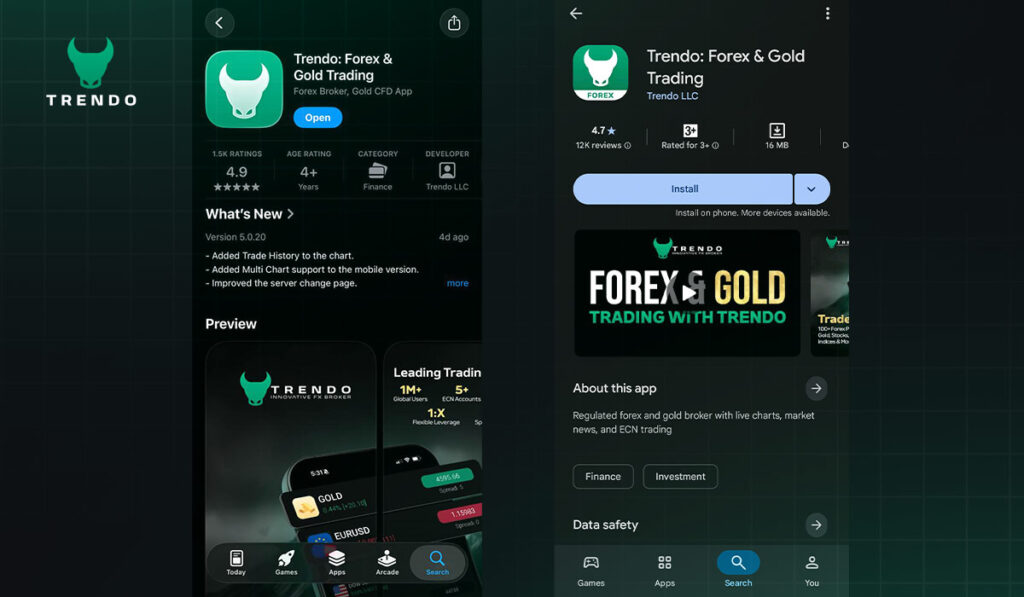
Verified user reviews on the Apple App Store and Google Play are among the most honest signals available because they come from real traders who have used the platform under live conditions. A broker app with under 4.0/5 on both platforms should raise questions. Ratings above 4.5/5 — especially with a large volume of reviews — are a strong indicator of consistent execution and usability. To put that in context, Trendo currently holds a 4.9/5 on the App Store and 4.7/5 on Google Play — a useful benchmark when comparing apps during your research.
Proprietary Platforms vs. MT4/MT5
MetaTrader 4 and MetaTrader 5 are industry standards, but they were not built with mobile-first users in mind. Proprietary platforms built from the ground up for mobile can offer faster execution, cleaner interfaces, and tighter integration with broker-specific features like copy trading and economic analysis.
Some brokers (like Trendo) have invested heavily in building their own award-winning platform rather than relying on third-party software, which often results in a more cohesive and responsive trading experience. The key is not which platform name it uses, but whether it performs reliably under real market conditions.
Criterion 4 — Account Types & Minimum Deposit
Any broker worth considering offers a free demo account with real market conditions. A demo account lets you test the platform’s execution speed, practice order management, and evaluate spreads without financial risk. It also reveals hidden behaviors — like requotes or order rejection — that you’d never see in a promotional video. Look for brokers that fund the demo generously — Trendo, for example, provides a $100,000 virtual balance, which gives you enough room to test strategies meaningfully without running out of practice capital. Part of knowing how to choose a forex broker is knowing how to use the demo environment as a diagnostic tool, not just a practice ground.
Always open a demo account before depositing real funds. If a broker doesn’t offer one, that is a red flag in itself.
Minimum Deposit Requirements
A low minimum deposit is a feature that matters most to new traders. It allows you to test a live account with small risk before scaling up. Responsible brokers offer:
- Micro or cent accounts for beginners practicing with real (but small) capital
- Standard accounts with typical lot sizes for intermediate traders
- ECN accounts with raw spreads and a per-lot commission for professionals and high-volume scalpers
Be cautious of brokers requiring $500 or more to open a basic account — that barrier often serves the broker more than the trader. Test everything risk-free first; open a Trendo demo account.
Criterion 5 — Deposit & Withdrawal Process
Red Flags to Watch For
The deposit process is always smooth at a problematic broker — that’s how they get your money in. It’s the withdrawal process that reveals the truth. When evaluating how to choose a forex broker, the withdrawal policy is where you must read carefully. Watch out for:
- Processing times longer than 3–5 business days for standard requests
- Withdrawal fees that weren’t disclosed upfront
- Requirements to submit excessive documentation before withdrawals
- Customer service that becomes unresponsive after a withdrawal request is submitted
- Withdrawal limits that force you to extract funds in small, inconvenient batches
What Fast, Transparent Withdrawals Look Like
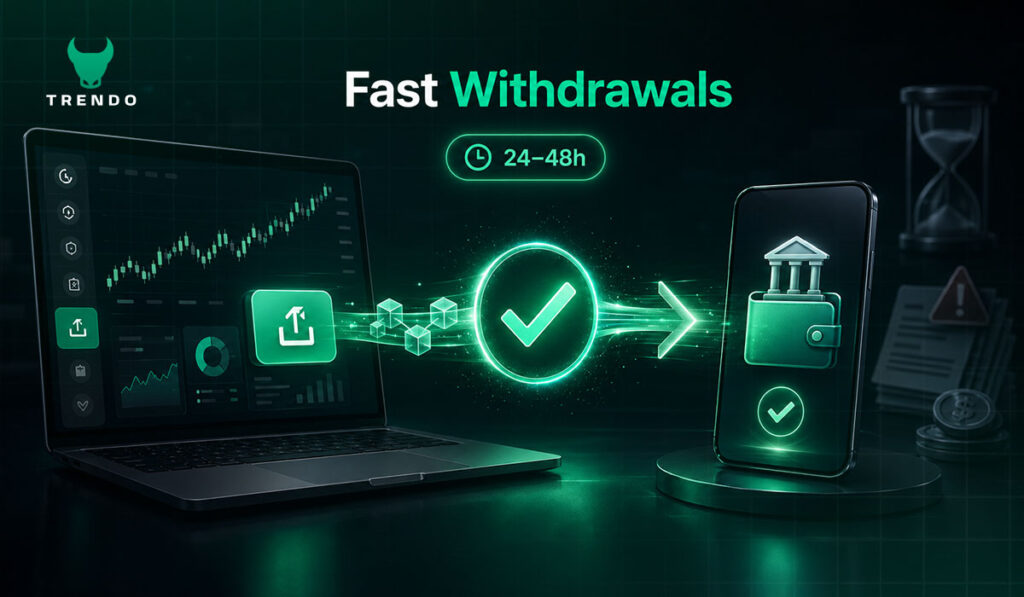
A trustworthy broker processes withdrawals within 24–48 hours for standard requests. The methods available for withdrawal should match the methods available for deposit — if a broker only accepts deposits by card but requires wire transfer for withdrawal, that asymmetry is intentional and concerning. Some brokers, like Trendo, have taken this further by offering blockchain-based withdrawals through their platform, which adds a layer of transparency and speed that traditional bank transfers simply can’t match.
Look for brokers that disclose all fees upfront in a fee schedule, not in fine print buried in the terms and conditions.
Criterion 6 — Customer Support
This is the most underused step in the process of how to choose the right forex broker. Before placing any real money, contact the broker’s support team with a specific technical question — something like “What is the average spread on XAUUSD during the London session?” or “How long does withdrawal typically take?”
Evaluate the response on three dimensions:
- Speed: Did they reply within 1–2 hours during business hours?
- Accuracy: Was the answer specific and verifiable, or generic and vague?
- Channel availability: Is live chat, email, and phone all accessible — or only one?
A broker whose support is unhelpful before you deposit will be even less responsive when you have an actual problem. This test takes 10 minutes and can save you significant stress.
Criterion 7 — Reputation & User Reviews
Independent review platforms are your most honest source of information about a broker’s day-to-day reliability. When researching how to choose the best forex broker, prioritize:
- Trustpilot: look for consistent patterns, not individual scores
- Google Play: particularly useful for app stability feedback
- App Store: verified purchaser reviews tend to be detailed and honest
How to Read Reviews Critically
Not all reviews are equal. Look for patterns across multiple reviews rather than reacting to individual outliers. Positive reviews that mention specific features (fast withdrawals, tight gold spreads, responsive support) are more credible than generic five-star comments with no detail. On the negative side, a cluster of similar complaints (especially about withdrawals) is a serious warning signal even if the overall score is high. Knowing how to choose a forex broker also means knowing how to evaluate social proof critically, not just at face value.
Your Forex Broker Checklist (Before You Deposit)
Use this how to choose a forex broker checklist before committing any capital. This is not a formality, each item deserves a genuine, verified answer.
- Is the broker regulated by a recognized authority? Verify the license number independently on the regulator’s official website.
- Have you tested the spreads on a demo account? Compare EURUSD, GBPUSD, and XAUUSD across at least two brokers.
- Is the trading app rated above 4.5/5 on Google Play and the App Store? Check the volume of reviews, not just the score.
- Does the broker offer a free demo account with realistic conditions? Use it for at least one week before going live.
- Are deposit and withdrawal methods clearly disclosed? Confirm processing times and fees before depositing.
- Have you tested customer support with a specific question? Evaluate both speed and accuracy of the response.
- Do independent review platforms show consistent positive feedback? Look for patterns across Trustpilot, Google Play, and the App Store.
Returning to this how to choose a forex broker checklist each time you evaluate a new broker will protect you from the most common and costly mistakes beginners make.
A Real World Example: How Trendo Measures Up
The clearest way to understand how to choose a forex broker is to apply the criteria above to a real broker. Here’s how Trendo performs against each of the seven standards.
Regulation & Registration
Trendo operates under TRENDING MARKETS (INTERNATIONAL) LTD, authorized by the Financial Services Commission (FSC) of Mauritius, holding license number GB25205094. The company also holds registration in Armenia under Trendo LLC and in Saint Lucia under Trendo Markets Ltd. Trendo broker has demonstrated its commitment to compliance by obtaining licenses from multiple regulatory authorities, alongside complete segregation of client funds. Traders can verify these licenses directly at Trendo’s Awards and Licensing pages.
Spreads & Trading Costs
Trendo offers ECN accounts with raw pricing, including 0.0 spreads on major forex pairs, with XAUUSD averaging approximately 0.5 pip. For gold traders in particular, this is one of the most competitive spread structures available, and it’s one of the reasons Trendo won the Best Gold CFD Trading Platform award at Forex Expo 2025. Commission on ECN accounts is $3 per lot traded, which is standard for raw-spread ECN pricing.
App Ratings & Platform
Trendo operates a proprietary, award-winning trading platform built specifically for mobile-first traders. The Trendo app is rated 4.9/5 on the App Store and 4.6/5 on Trustpilot. Features include multi-chart layouts and chart replay/strategy replay — tools that are often paid features on other platforms, offered free within Trendo. You can download the Trendo Forex Trading Platform directly from the App Store or Google Play.
Trustpilot & User Reputation
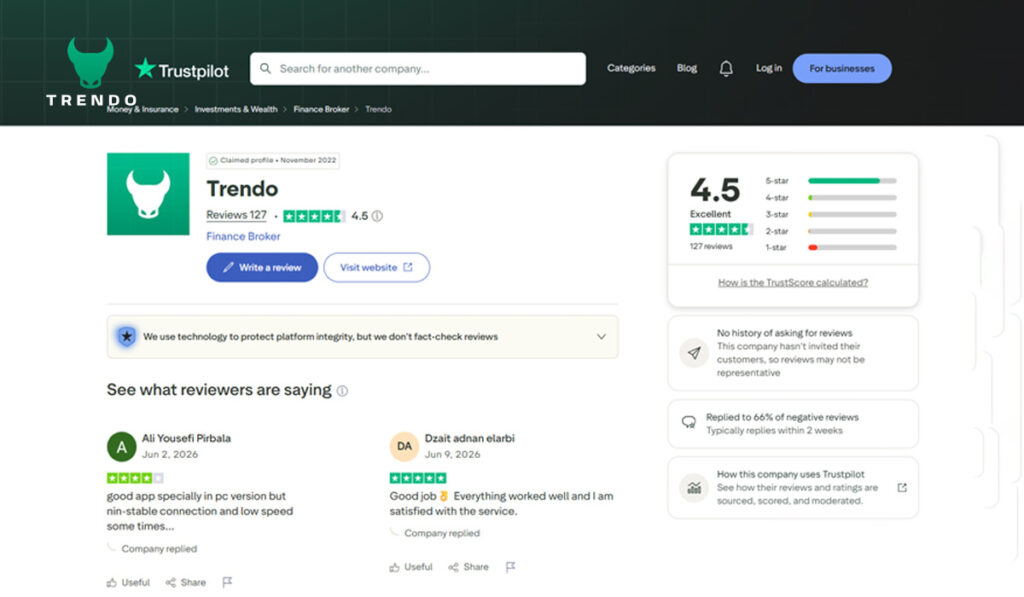
Trendo is trusted by over 1,000,000 users globally, with ratings of 4.7/5 on Google Play and 4.6/5 on Trustpilot. In 2025, Trendo surpassed the 1,000,000 active user milestone — a figure that reflects real trader trust, not just marketing reach. View Trendo’s reviews on Trustpilot and form your own assessment based on real trader feedback.
Final Thoughts: Take Your Time, Compare Honestly
Understanding how to choose a forex broker is not about finding the flashiest platform or the biggest bonus, it’s about identifying the broker that offers genuine regulatory protection, transparent costs, reliable technology, and responsive support. Every criterion in this guide serves as a filter. The time you invest in due diligence before depositing will pay dividends over your entire trading career. If you’re ready to put these standards to the test, register with Trendo and start with a free demo account to experience what a properly vetted broker looks like in practice.